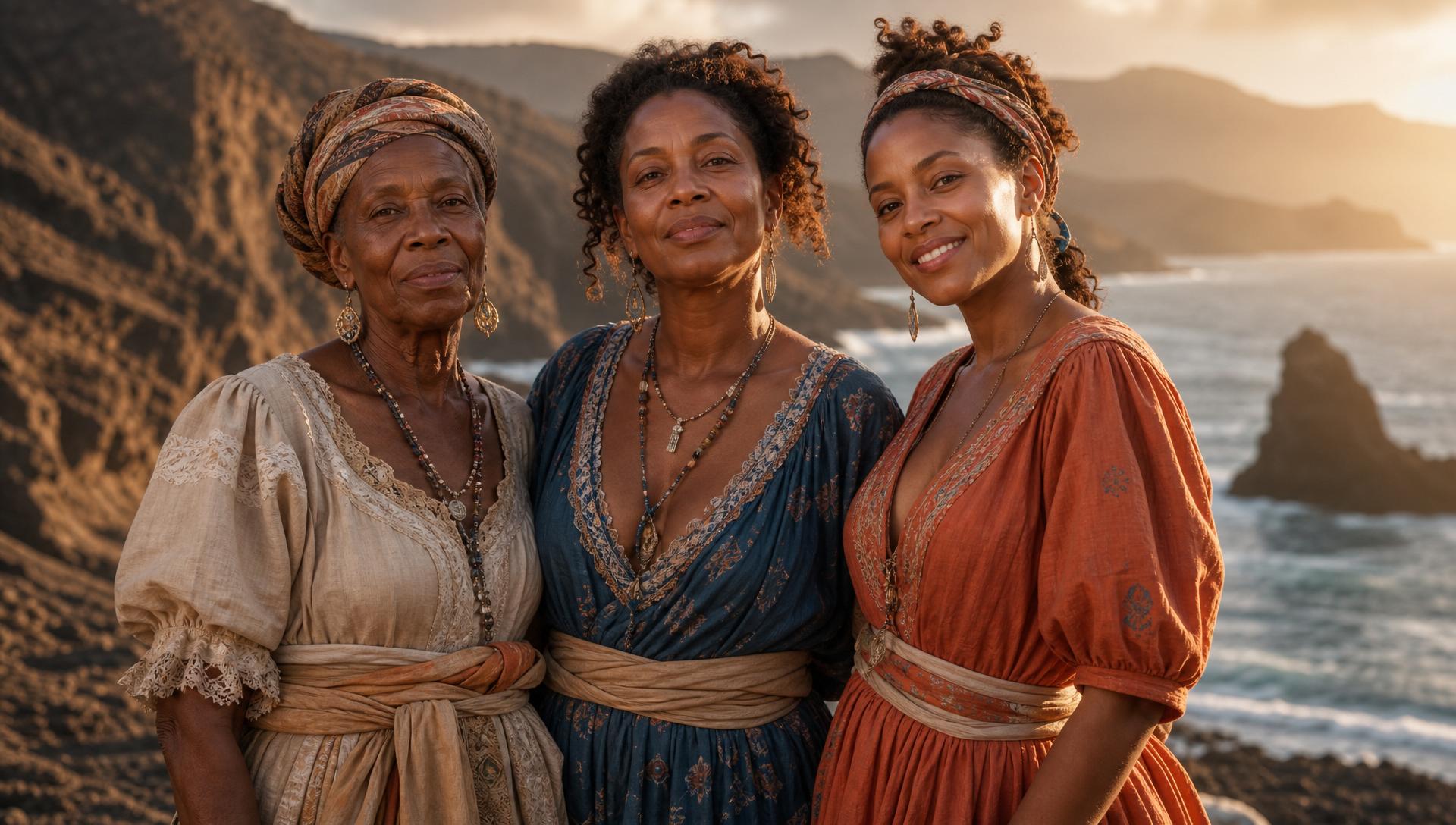
The Cape Verdean way of life: the unwritten rules, the daily rhythms, and the warmth that defines everything.
"We don't have much, but we have each other. And if you are here, you are one of us."
To understand Cabo Verde, you have to slow down. The islands run on a different clock — not the one on your phone, but the one measured in cups of coffee, front-door greetings, and the time it takes for a neighbor to stop by unannounced and stay for dinner. This is a place where relationships are currency, where family is geography, and where the word morabeza is less a greeting than a way of being.
Below is a window into the daily life and cultural norms that shape how Cape Verdeans move through the world — and how visitors can move through it with them.
Morabeza — the national art of welcome
Morabeza is the first word every traveler learns, and the last one they forget. It means hospitality, but that doesn't capture it. It's the shopkeeper who walks you to the next street because you asked for directions. It's the family that insists you eat even when they weren't expecting you. It's the taxi driver who remembers your name three days later.
The expectation is reciprocal: if someone offers you something — food, help, a seat — you accept with grace. Refusing too firmly can feel like rejection. And if you are invited into a home, come hungry, come grateful, and don't rush to leave.
Family is the center of gravity
Cape Verdean households often stretch across generations. Children are raised by mothers, aunts, grandmothers, and older cousins in equal measure. Elders command quiet authority; their opinions carry weight at family meetings, and their blessings are sought before big decisions. It is common for adult children to live at home until marriage, and for married couples to remain deeply embedded in their extended families.
The diaspora only reinforces this. A son in Boston sends money home. A daughter in Lisbon calls her grandmother every Sunday. Family WhatsApp groups span three continents and six time zones, and when someone dies or gets married, the whole network rearranges itself to be there.
The rhythm of the day
Mornings start early, especially in the countryside. Fishermen push boats into the dark before sunrise. Women open market stalls by 6am. Office workers in Praia navigate traffic and the heat, but the pace is rarely frantic. Lunch is the main meal, often eaten at home if possible, and the early afternoon can feel quiet — a holdover from the siesta tradition.
Evenings belong to the street. In every town, people gather on doorsteps, in praças, at corner shops. Men play cards. Women braid hair and trade news. Children run free in a way that would startle most American parents, watched by a village of eyes. The day ends late, soundtracked by music from open windows and passing cars.
Music is not entertainment — it's conversation
You cannot separate Cape Verdean life from its music. Morna, the blues-tinged national sound, carries longing and saudade. Funaná, with its accordion and ferrinho, is made for dancing close and fast. Batuku is women's music — drums, voices, and movement that once belonged to resistance and now belongs to celebration.
Music happens at weddings, funerals, birthdays, and Tuesday nights for no reason at all. If you are invited to dance, say yes. You don't need to know the steps. You need to be willing to try.
Faith, festivals, and the sacred calendar
Most Cape Verdeans are Roman Catholic, but the islands practice a relaxed, communal Catholicism — processions are social events, saints' days are neighborhood holidays, and church is as much about seeing people as it is about prayer. On Fogo, the pilgrimage to the volcano, Nossa Senhora da Fátima, draws the faithful and the curious alike.
Carnival is the big public festival, especially on São Vicente, where Mindelo's streets fill with costumes, music, and rum. But smaller festas happen year-round: the festival of São João, the harvest celebrations, the municipal saints' days. If a village is celebrating, you are welcome. Just bring your appetite.
The unwritten rules for visitors
Cape Verdeans are forgiving of outsiders, but a little cultural awareness goes a long way. Dress modestly outside the beach towns — shoulders and knees covered in churches, villages, and government offices. Greet people before asking for anything; a simple "Bom dia" or "Noite" opens doors. Don't photograph people without asking. Don't raise your voice in disagreement; calm, indirect communication is valued over confrontation.
Time is flexible. If someone says "daqui a pouco" — a little while — it could mean twenty minutes or two hours. Plan accordingly, and don't let it frustrate you. The slowness is part of the gift.
Work, struggle, and pride
Life on the islands is not easy. Water can be scarce. Jobs can be scarce. Many young people still leave for Lisbon, Rotterdam, or Boston. But there is a deep pride in making it work here — in building a life on volcanic soil, in raising children who speak Kriolu, in sending a little money home even when there isn't much to spare.
That pride shows up in how people present themselves. Homes are swept clean. Children leave for school in crisp uniforms. Women dress with care even for a trip to the market. Dignity is not dependent on income.
The women who hold it together
If you want to understand Cape Verdean society, watch the women. They run the markets, raise the children, manage the households, organize the festivals, and increasingly lead the businesses and government. The image of three generations together — grandmother, mother, daughter — is not sentimental here; it is structural. Knowledge, recipes, songs, and survival strategies travel down that line.
Visitors, especially women travelers, often remark on how safe and respected they feel. That is not accidental. It is the result of a culture that values protection, community, and the public dignity of women.
"We don't ask you where you come from. We ask if you are well, if you have eaten, and if your mother is okay."
Experience the culture for yourself.
The free US Traveler's Guide + Island CheatSheet includes the customs, phrases, and everyday etiquette that help you travel like a guest, not a tourist.
Get the free guide →Cultural experiences in Cabo Verde
Local-led walking tours, music nights, cooking classes, and village visits that put you inside the culture — not outside it.
As a CaboBound partner, we may earn a small commission if you book through these links — at no extra cost to you.