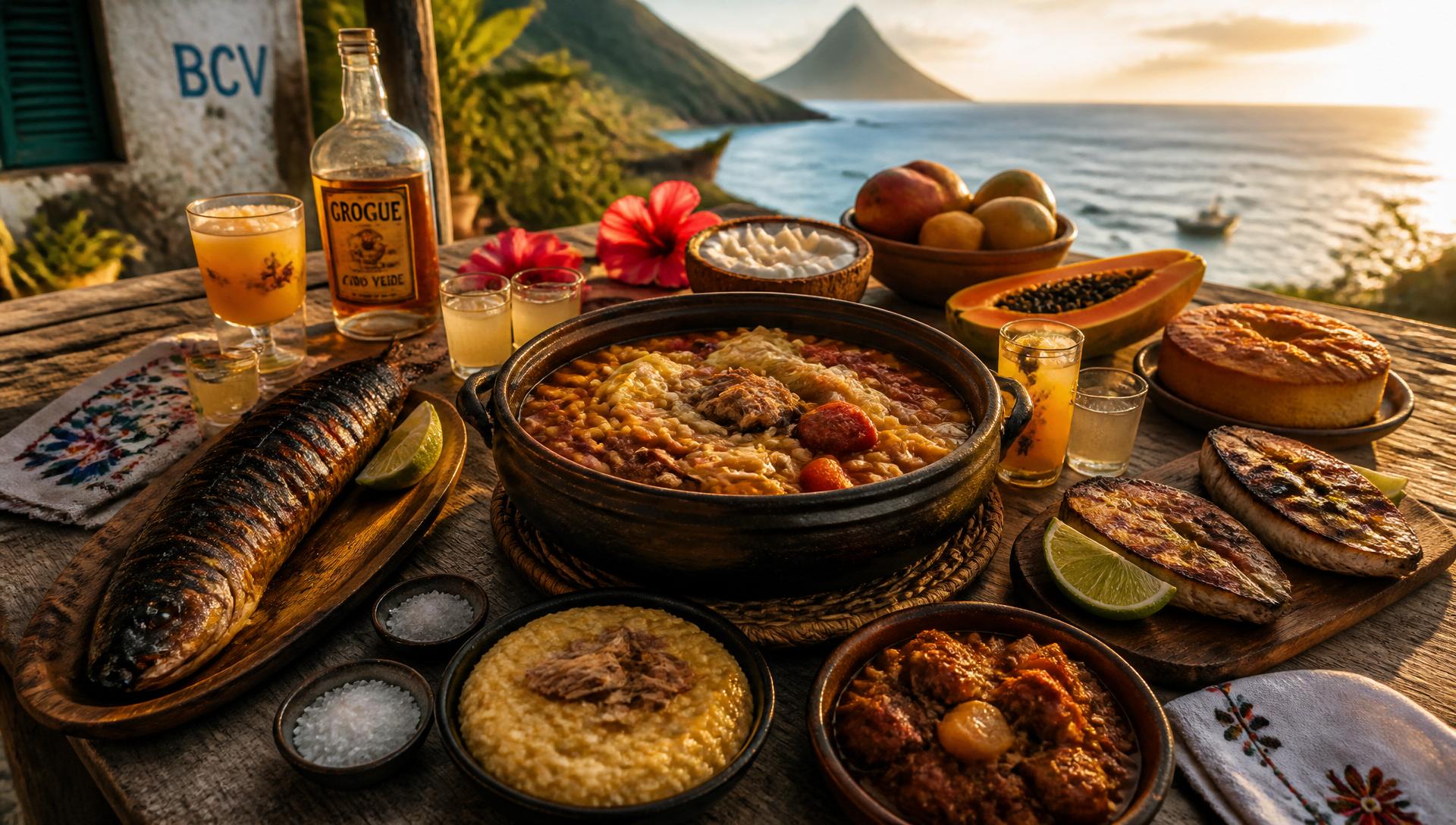
The top 10 foods of Cabo Verde — and what locals really think of them.
"Our food isn't fancy. It's honest. Corn, beans, fish, the sun, and enough time. Everything else is just showing off."
Cape Verdean cooking was born from what the islands didn't have. No rivers to speak of. Volcanic soil that had to be argued with. Centuries of drought. And yet — a cuisine took shape, one that married Portuguese pantries with West African patience, that stretched corn and beans into feasts, and that treated the Atlantic as a second pantry.
Below are the ten dishes and drinks that come up again and again when Cape Verdeans talk about home — with a word from the people who cook them.
- 01
Cachupa
The national dish. The reason everyone comes home hungry.
A slow-simmered stew of hominy corn, beans, cassava, sweet potato, cabbage and whatever meat the day allowed — pork, chorizo, chicken, sometimes tuna. Every island has its version. Every grandmother has hers. Cachupa rica is the Sunday one, loaded. Cachupa pobre is Monday, humbler and, some say, better. Reheated the next morning with a fried egg on top — cachupa guisada — it becomes the national breakfast.
"If a Cape Verdean invites you home and there's no cachupa on the stove, you should be worried."
— Dona Lena, Santiago - 02
Grilled Tuna (Atum grelhado)
Caught this morning. Grilled by lunch.
The Atlantic here is one of the richest tuna corridors on earth. On Sal and São Vicente, a steak of yellowfin — thick as a paperback, seared rare, dressed only with lime, sea salt, and a spoon of molho cru (raw onion-vinegar sauce) — is the standard beach lunch. If it tastes better than any tuna you've had, that's because it is.
"You don't cook tuna here. You just don't ruin it."
— Rui, fisherman, Palmeira - 03
Pastel de milho
The empanada that runs the islands.
A crescent-shaped fried pastry with a golden corn-flour crust and a filling of spiced tuna, onion and a hit of piri-piri. Sold by aunties from covered baskets outside schools and ferry terminals. Two escudos, no napkin, eaten walking. If you only eat one street food in Cabo Verde, it's this one.
"My mother sold these to send me to school. Now I sell them to send my kids."
— Marisa, Praia - 04
Xerém
Corn, patience, and everything that comes with it.
A creamy porridge of cracked corn cooked down for hours until it turns silky. Served under grilled fish, pork trotters, or a rich meat stew. Poor food that became beloved food — the taste of a childhood every islander recognizes. Xerém de camarão, topped with prawns, is the celebratory version.
"Xerém is what my grandmother made when there was nothing. That's why we still eat it when there's everything."
— Djunga, Fogo - 05
Buzio (sea snails)
Bar food, island edition.
Fat conch-like sea snails simmered in garlic, wine, coriander and a lot of chili. Served in a small clay bowl with a toothpick and a cold Strela beer. Every port bar on São Vicente has them. Order a plate, order another beer, do not plan the rest of the evening.
"One buzio, one Strela. Two buzio, two Strela. That's the math."
— Bar owner, Mindelo - 06
Modje di São Nicolau
The wedding stew.
The signature dish of São Nicolau, cooked for weddings, baptisms and homecomings. Goat or beef, sweet potato, banana, cassava and squash, all steamed together in a single pot until each ingredient tastes of the others. It's harder to find than cachupa — which is part of what makes it special when you do.
"You don't order modje. You get invited to modje."
— Home cook, Ribeira Brava - 07
Feijoada à Cabo-verdiana
The Portuguese classic, remixed by the islands.
The Cape Verdean feijoada trades the Brazilian black bean for the local butter bean or feijão pedra, adds linguiça and pork belly, and finishes with a thick, orange-tinted sauce spiked with piri-piri. Eaten with white rice and a small pile of raw onion. Sunday food.
"Portugal gave us the recipe. We gave it the sun."
— Chef Nuno, Santa Maria - 08
Lagosta grelhada
Spiny lobster, mostly untouched.
Cabo Verde's cold-water spiny lobster is sweet, dense, and — because so much of the catch stays local — often eaten hours out of the sea. Split, grilled over charcoal, brushed with garlic butter, hit with lime. A splurge dinner on Boa Vista or Sal that still costs a fraction of what it would anywhere else in the Atlantic.
"The lobster doesn't need a chef. It needs a fire and someone paying attention."
— Grill cook, Sal Rei - 09
Doce de coco & Pudim
The sweet coda.
Dessert on the islands is short and honest. Doce de coco — shredded coconut cooked with sugar and lime zest until sticky and caramelized. Pudim de leite — a dense flan with a bitter caramel top. Both usually homemade, both often eaten out of a small dish on a plastic chair, both far better than they have any right to be.
"The pudim always tastes better at somebody else's house."
— Every Cape Verdean, ever - 10
Grogue & Ponche
The drink that runs the party.
Grogue is sugarcane spirit, distilled in copper stills on Santo Antão and São Nicolau, drunk neat in tiny glasses. Ponche is grogue softened with honey or molasses and, sometimes, fruit — the version tourists start with and locals return to. Toast with saúde. Sip, don't shoot. The good grogue tastes like the field it came from.
"Grogue is not for getting drunk. Grogue is for talking longer."
— Distiller, Paúl valley
How to actually find the real thing
Skip the beachfront hotel buffet for at least one lunch. Ask a taxi driver where his mother eats. Walk past any restaurant with a laminated multi-language menu. The best cachupa on any island is almost always in a small tiled dining room with no website, three tables, and a woman who doesn't need to ask what you want because there's only one thing.
And when someone offers you a small glass of grogue at eleven in the morning — say yes. It's not about the drink. It's about the fact that you were offered.
Eat your way through the archipelago.
The free US Traveler's Guide + Island CheatSheet includes the markets, morabeza rules, and neighborhood spots locals send friends to — one per island.
Get the free guide →Food tours & tastings in Cabo Verde
Local-led experiences — market walks, cachupa cook-alongs, grogue tastings — bookable now.
As a CaboBound partner, we may earn a small commission if you book through these links — at no extra cost to you.